Happy 1st Day of Pre-school SVG Review
As a professional embroidery digitizer and product reviewer, I approach every new file with a healthy dose of skepticism. The market is flooded with graphics that look pristine on a screen but fail catastrophically under the needle. When evaluating the Happy 1st Day of Pre-school SVG, my primary concern is translation: how does this vector-based cutting file convert into a tangible, stitched reality? While originally marketed as an instant download cutting file compatible with Cricut and Silhouette machines for T-shirt designs, its potential in the embroidery space requires a critical eye. For Etsy sellers, craft business owners, and makers preparing for the back-to-school rush, understanding the structural integrity of this design is the difference between a bestseller and a production headache.
First Impressions and Visual Personality
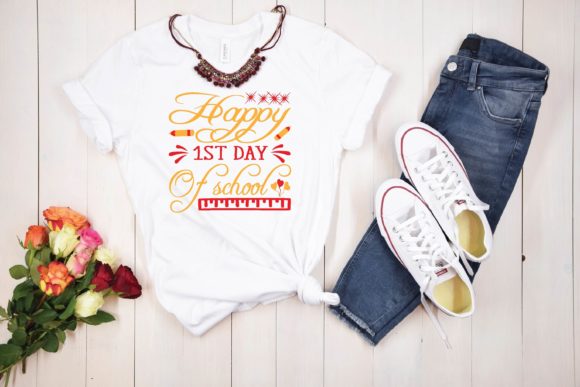
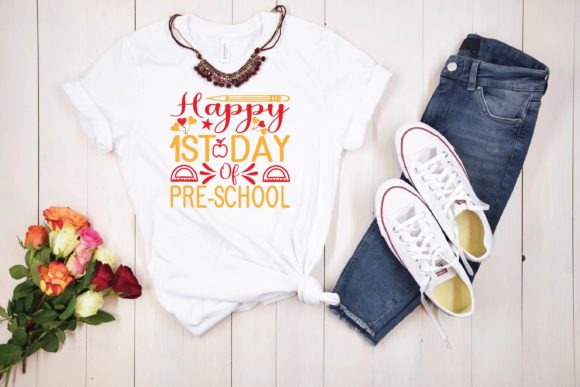
Upon opening the file, the Happy 1st Day of Pre-school SVG presents a cheerful, nostalgic aesthetic that immediately resonates with parents and educators. The layout typically balances playful typography with iconic school imagery like pencils, books, or sunbursts. As a graphic, it has excellent visual hierarchy, which is crucial for embroidery. However, because this is primarily a cutting file, the lines are optimized for blades, not needles. This distinction matters immensely.
The mood is undeniably celebratory and tender, making it ideal for personalized gifts and milestone markers. Yet, as a designer, I notice areas where the vector paths may be too intricate for standard satin stitch columns or too sparse for adequate fill stitch coverage. The charm lies in its whimsy, but for a handmade product to feel professional, that whimsy must be backed by technical stability. If you are planning to use this for custom apparel or nursery decor, expect a design that feels youthful and energetic, provided you address the vector-to-stitch conversion challenges early in your workflow.
Real-World Application: The Toddler Sweatshirt Test
To truly evaluate this asset, I mentally placed it in a high-stakes scenario: embroidering a custom sweatshirt for a three-year-old’s first day. This is a classic use case for small shop products and boutique branding. Toddler sweatshirts present specific challenges; the fabric is often a cotton-poly blend fleece that can shift, and the garment size limits your hoop size significantly.
In this context, the Happy 1st Day of Pre-school SVG serves as an excellent applique design candidate rather than a dense fill stitch project. Using the SVG outlines as guides for fabric placement allows you to keep the stitch count manageable and the garment soft against sensitive skin. I envision using a textured waffle knit or corduroy for the applique letters to add tactile interest that complements the pre-school theme. For an Etsy seller, offering this as a mixed-media piece—combining the precision of the SVG cut line with the warmth of embroidery—elevates the perceived value far beyond a standard printed tee. It transforms a simple digital embroidery file into a premium keepsake.
Navigating Fabric Limitations and Hoop Constraints
Not every surface welcomes this design equally. Because the Happy 1st Day of Pre-school SVG originates from the cutting world, fine details may exist that are problematic for machine embroidery design on unstable fabrics. I would exercise extreme caution when applying this to stretchy jersey knits without substantial stabilizer. The tension required to hold crisp lettering derived from SVG vectors can distort thin t-shirt material, leading to puckering that ruins the finished product.
Furthermore, consider the scale. This graphic works beautifully as a centered chest design or a tote bag design, but it may struggle on curved surfaces like caps unless simplified. Detailed corners and tiny serifs common in school-themed fonts can become mud when stitched at smaller sizes. If you are creating baby embroidery items or patches, you must verify that the smallest elements remain distinct after digitizing. Dark fabrics also pose a risk; if the original SVG relies on negative space for definition, you will need to create a solid underlay or background fill stitch to ensure the design reads clearly against navy or black garments. Always prioritize readability over fidelity to the original vector when working with challenging textures.
Elevating Product Value and Customer Trust
For creative entrepreneurs and commercial embroidery businesses, the way you execute this design directly impacts buyer engagement. Customers can instinctively tell the difference between a rushed digitization and a thoughtfully adapted embroidery project. When the Happy 1st Day of Pre-school SVG is stitched with appropriate density and clean transitions, it signals professionalism. It tells the parent buying a holiday gift or a teacher purchasing a personalized apron that you understand the medium.
This attention to detail builds brand consistency. If you sell digital product previews or printable mockups alongside physical goods, ensure your mockups accurately reflect how the stitches interact with fabric texture. Misleading representations lead to returns. Conversely, showcasing the realistic sheen of thread colors and the dimensionality of the stitch types enhances recognition and trust. A well-executed version of this design becomes a versatile asset in your catalog, suitable for everything from kitchen towels to backpack tags, reinforcing your reputation as a maker who delivers quality.
Critical Designer Notes Before You Stitch
Before loading this design into your machine or listing it in your shop, adhere to these practical protocols to ensure success:
- Verify Licensing Terms: Since this is described as an instant download cutting file, confirm whether the license permits commercial embroidery use or modification for digitized resale. Do not assume rights transfer across mediums.
- Test on Scrap Fabric First: Never run a new conversion directly on a client’s garment. Use similar weight and weave scrap fabric to check registration and tension.
- Assess Stitch Density: Vector lines have no width. When converting to satin stitch or running stitch, manually adjust column widths to prevent gaps or excessive bulk.
- Check Thread Color Contrast: Test the design in both light and dark thread variations. Some SVG details rely on color blocking that may disappear if using monochromatic embroidery thread.
- Select Proper Stabilizer: Match your stabilizer to the end use. Tear-away may suffice for towels, but cut-away is non-negotiable for wearable custom apparel to maintain shape after washing.
- Inspect Small Details: Zoom in to 400% in your embroidery software. If a letter interior is smaller than 2mm, simplify or remove it. Needles cannot reliably stitch microscopic vector points.
- Mockup Realistically: Create black and white mockups to test contrast independent of color. This ensures the design holds up visually even in subtle tone-on-tone applications.
The Happy 1st Day of Pre-school SVG offers tremendous potential for the upcoming school season, bridging the gap between digital crafting and textile art. By treating it not just as a picture, but as a blueprint for physical construction, you unlock its true value. Whether you are stitching a sentimental baby gift or scaling production for a craft business, respect the technical requirements of embroidery. The result will be a product that honors the excitement of that first day while standing the test of time, wear, and wash. Always remember that in our industry, the most beautiful design is one that survives the transition from screen to seam with grace and durability.