School Zone SVG: An Embroidery Designer’s Review
When I first opened the School Zone SVG file, my immediate thought was not about cutting vinyl, but about how these clean vector lines would translate into thread. As an experienced embroidery designer and product reviewer, I constantly evaluate digital assets through the lens of needle and fabric. While this product is marketed as an instant download cutting file compatible with Cricut and Silhouette for T-shirt designs and graphics, its bold geometry makes it a compelling candidate for digitizing into a machine embroidery design. The aesthetic is nostalgic yet modern, evoking safety, childhood milestones, and community care. For small business owners and Etsy sellers targeting parents, teachers, or school staff, this graphic carries an inherent emotional weight that can elevate a simple handmade product into a meaningful personalized gift.
Translating Vector Lines to Stitched Reality
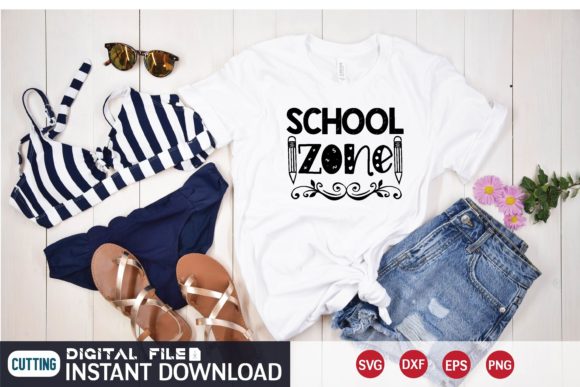
The visual personality of the School Zone SVG is defined by high contrast and recognizable shapes. In the world of apparel decoration, clarity is king. When evaluating this for real project use, specifically for custom apparel like sweatshirts or tote bags, I look for negative space that allows the fabric to breathe. This design succeeds because it avoids overly intricate internal details that often turn into bulletproof vests when stitched out. The bold outlines suggest themselves naturally as satin stitch borders, while the interior spaces are perfect candidates for fill stitch patterns that mimic road texture or signage sheen without excessive stitch density.
For a recent client project involving a teacher appreciation week, I considered this design for a canvas tote bag design. The graphic’s layout is balanced enough to serve as a centerpiece on a 15x15 inch hoop size, but it also scales down effectively for a pocket-sized logo on a polo shirt. However, scaling requires caution. If you reduce the design too much for baby embroidery or sleeve cuffs, the text elements within the "School Zone" motif may require simplification. Tiny lettering in a digital embroidery file often becomes illegible unless converted to running stitch or removed entirely in favor of pure iconography. Always review your digitized version at actual print size before committing to a full production run.
Real-World Application: The Teacher’s Lounge Sweatshirt
To truly test the viability of this asset, I mentally walked through creating a crewneck sweatshirt for a local PTA fundraiser. The goal was a garment that felt professional yet approachable—something a teacher would actually wear outside of school hours. Using the School Zone SVG as the base for an applique design proved to be a strategic move. By using the SVG lines as a placement guide for fabric pieces rather than filling the entire area with thread, we reduced the stitch count significantly. This kept the sweatshirt embroidery soft and flexible, avoiding the stiff, heavy feel that often plagues commercial embroidery projects on knit fabrics.
Customer reaction to this style of design tends to be positive because it signals specific identity. Unlike generic clip art, a school zone theme resonates with a niche audience. For an Etsy seller or craft business, this specificity builds buyer engagement. When listing such items, using printable mockups that accurately reflect the stitched texture helps manage customer expectations. I found that pairing this graphic with muted, vintage-inspired thread colors created a boutique branding feel that distinguished the finished product from mass-produced alternatives. The design acts as a conversation starter, making it ideal for holiday gifts or back-to-school merchandise where recognition and professionalism matter.
Navigating Fabric Challenges and Technical Limits
Despite its versatility, the School Zone SVG demands respect for technical constraints. Not every surface is suitable for this level of graphic detail. I advise extreme caution when applying this design to textured fabrics like terry cloth towels or ribbed knits. The fine lines characteristic of traffic signage aesthetics can get lost in the pile of a kitchen towel unless you use a water-soluble topping and a sturdy stabilizer. Similarly, stretchy fabrics like jersey cotton require careful hooping and adequate stabilization to prevent distortion; a warped stop sign looks unprofessional and undermines trust in your handmade shop.
Dark fabrics present another consideration. Since this design relies on shape definition, stitching light thread on dark material requires sufficient underlay to prevent the fabric color from bleeding through. Conversely, if you plan to use this for patches or caps, verify that the curved surface of the hat frame won’t distort the horizontal lines of the zone marker. Caps are notoriously difficult for geometric designs because the curvature naturally bends straight lines. In such cases, you might need to adjust the digitizing specifically for headwear, separating the design elements to accommodate the curve. Always check whether your source file licensing permits modification for commercial embroidery projects before altering the original artwork.
Designer Notes for Professional Results
Before adding this design to your inventory or starting a batch of custom orders, adhere to these practical protocols to ensure quality and compliance:
- Test on Scrap Fabric First: Never assume screen accuracy equals stitch accuracy. Run a test sew-out on the exact fabric and stabilizer combination you intend to use for the final product.
- Verify Licensing Terms: This product is described as a cutting file. Confirm explicitly whether the license extends to digitizing for commercial embroidery sales or if it is limited to personal use and vinyl applications.
- Check Thread Color Contrast: Test the design in black and white mockups to ensure the values hold up without relying solely on color differentiation. Good design reads well even in monochrome.
- Inspect Small Details: If the SVG includes text smaller than 0.2 inches when scaled, consider removing it or replacing it with larger block letters to maintain legibility in the finished product.
- Evaluate Stabilizer Needs: Match your backing to the fabric weight. A tear-away might suffice for denim, but a cut-away is non-negotiable for stretchy knits used in baby clothes or t-shirts.
- Review Stitch Density: Ensure the digitized version doesn't exceed safe density limits for the target fabric to prevent puckering or needle breaks during production.
Elevating Handmade Value Through Thoughtful Design
Ultimately, the School Zone SVG offers more than just a cute graphic; it provides a framework for creating products with genuine narrative value. Whether you are producing embroidered patches for a daycare staff, customizing aprons for a school cafeteria team, or designing nursery decor for a new parent, the success lies in execution. A well-digitized version of this file respects both the original art and the physical limitations of thread. It bridges the gap between digital convenience and tactile craftsmanship.
For creative entrepreneurs, investing time in properly adapting this asset pays dividends in brand consistency and customer satisfaction. Buyers can tell the difference between a rushed transfer and a thoughtfully engineered embroidery project. By treating this SVG as a blueprint rather than a final destination, you transform a simple download into a premium design asset that supports your business goals. Remember to always validate your specific machine compatibility and hoop size requirements before purchase, as the original file format is intended for cutting machines. With due diligence and creative adaptation, this design can become a staple in your collection of profitable, meaningful handmade goods.