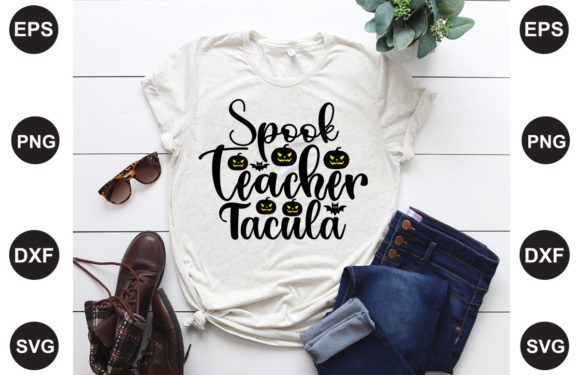
Spook Tacula Teacher: An Embroidery Design Review
As a professional embroidery designer and product reviewer, I approach every new graphic with a specific question: will this actually stitch out well on a finished product? When evaluating Spook Tacula Teacher, my focus shifts immediately from the screen to the hoop. This design falls under the T-Shirt Designs and Graphics category, but for those of us running a craft business or managing an Etsy shop, it represents potential inventory. The aesthetic is undeniably charming, blending seasonal whimsy with educational themes, yet the true test lies in its technical execution. Before loading this machine embroidery design into your production queue, it is vital to understand how its visual personality translates into physical thread.
First Impressions and Visual Mood
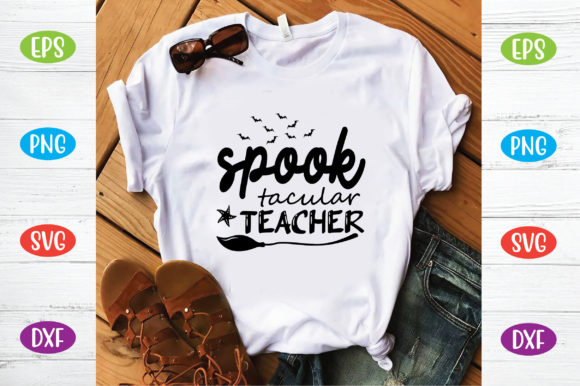
Upon opening the digital embroidery file, Spook Tacula Teacher presents a distinct mood that balances spooky fun with approachable warmth. It avoids being overly terrifying, making it suitable for younger audiences or lighthearted holiday merchandise. The layout feels intentional rather than cluttered, which is a relief for apparel decorators who need clean visuals. As a graphic asset, it has strong character, but as an embroidery project, the shape dictates the workflow. The silhouette appears solid enough to support various stitch types, though the intricate details typical of teacher-themed graphics require careful scrutiny. For a handmade product, this balance is crucial; you want the item to read clearly from a distance while rewarding closer inspection with quality craftsmanship.
Real-World Application: The Sweatshirt Test
To truly evaluate this design, I mentally placed it in a real-life scenario: creating a custom embroidered sweatshirt for a boutique fall collection. Sweatshirts are a staple for small shop products, but their fleece backing and stretchy knit fabric present unique challenges. Spook Tacula Teacher seems ideally sized for center-chest placement on adult crewnecks or left-chest positioning on youth sizes. In this context, the design needs to withstand the texture of the fleece without losing definition.
If I were producing this for a client, I would treat it as a potential applique design if the file supports it, or ensure the fill stitch areas are not excessively dense. Heavy stitch density on a sweatshirt can create a "bulletproof" patch effect that causes the garment to pucker and drape poorly. For a commercial embroidery project aimed at teachers or parents, the tactile feel matters as much as the visual. A stiff, over-stitched area reduces the perceived value of the personalized gift. Conversely, if used on a tote bag design, the canvas provides a stable foundation where higher stitch counts might actually be beneficial for durability and coverage.
Navigating Fabric Variables and Hoop Constraints
Not all substrates are created equal, and Spook Tacula Teacher requires strategic planning depending on your chosen medium. While it shines on stable cottons and poly-cotton blends, caution is necessary for other applications.
- Stretchy Fabrics: When working with knits or performance wear, proper stabilizer selection is non-negotiable. Use a cut-away stabilizer to prevent distortion during stitching and washing.
- Textured Surfaces: On terry cloth towels or nubby linens, fine details like facial expressions or small text may get lost. Consider using a water-soluble topping to keep stitches visible above the fabric pile.
- Curved Items: If adapting this for caps or hats, verify the curvature compatibility. Flat graphics often distort when wrapped around a curved brim unless specifically digitized for 3D surfaces.
- Small Hoop Sizes: Scaling down is often riskier than scaling up. Tiny lettering or thin satin stitch borders may disappear or cause needle breaks if reduced below the minimum safe threshold.
For baby embroidery or items requiring frequent laundering, ensure the design lacks loose jumps or fragile elements that could snag. Durability is a key component of customer trust, especially for children's apparel.
Technical Considerations for Professional Results
The transition from a digital PNG or SVG to a stitched reality involves technical variables that define the success of your finished product. Even if Spook Tacula Teacher looks perfect in software, real-world factors like thread tension and fabric grain play massive roles. Stitch density should be reviewed before production; too light and the fabric shows through, too heavy and the material buckles. Thread colors also demand attention. High contrast between the design and the garment background enhances readability, whereas low contrast creates a subtle, tone-on-tone effect that appeals to different demographics.
I strongly advise testing the design on scrap fabric identical to your final product before committing to bulk production. Check whether the registration marks align perfectly and if the satin stitch edges are crisp. For Etsy sellers and creative entrepreneurs, this step prevents costly rework and returns. Additionally, verify the licensing terms associated with the EPS, PNG, DXF, and SVG files. Confirming whether you have rights for commercial embroidery versus personal use protects your business integrity. Never assume a digital purchase includes unlimited resale rights for physical goods or digital redistribution.
Elevating Product Value and Brand Consistency
Beyond technical execution, Spook Tacula Teacher impacts your brand’s market position. A cleanly executed embroidery project signals professionalism. Buyers can distinguish between a rushed job and a carefully crafted piece. When this design is rendered with appropriate stabilizers, correct thread weights, and mindful placement, it elevates the entire garment. This is particularly relevant for holiday embroidery collections where competition is fierce. Unique, well-made items stand out against mass-produced alternatives.
Consider how this graphic integrates with your existing catalog. Does it match the style of your current offerings? Consistency builds recognition. If you sell printable mockups alongside physical items, ensure the digital preview accurately represents the stitched texture. Misleading customers with flat vector images when selling textured embroidery leads to dissatisfaction. Authentic presentation fosters long-term loyalty.
Practical Designer Notes for Success
Before adding Spook Tacula Teacher to your lineup, run through this practical checklist derived from years of industry experience:
- Verify File Integrity: Ensure the embroidery file format matches your machine’s requirements and hasn’t been corrupted during transfer.
- Assess Detail Scale: Measure the smallest text or feature physically. Anything under 4mm height risks illegibility.
- Test Colorways: Stitch samples on both light and dark fabrics. Some designs rely on outline stitches that vanish on matching backgrounds.
- Review Stabilizer Pairings: Document which stabilizer works best for each fabric type to maintain consistency across future batches.
- Check Licensing: Re-read the vendor’s terms regarding modified designs, resale limits, and attribution requirements.
- Create Accurate Mockups: Photograph actual stitched samples for listings rather than relying solely on digital renders to manage buyer expectations.
Ultimately, Spook Tacula Teacher offers significant potential for makers and business owners willing to invest time in proper preparation. Its blend of seasonal charm and thematic relevance makes it a versatile asset for custom apparel, patches, and gifts. By approaching it with a critical eye toward stitch mechanics and end-use functionality, you transform a simple graphic into a profitable, high-quality product that resonates with customers. Remember, in the world of textile art, the difference between a good design and a great product lies entirely in the execution. Take the extra hour to test, adjust, and refine. Your reputation and your bottom line depend on it.